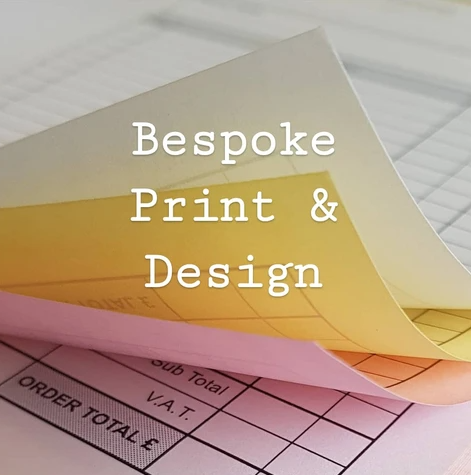
Carbon paper is a low-cost reprographic device used to create a single duplicate of a document at the same time as the original, as in Mastercard exchange receipts, authoritative archives, compositions, letters, and other simple structures. Indeed, even in the twentieth century, copying archives for company designs was a time-consuming and labor-intensive process. Like the recorders of chapels and government offices before them, Duplicate agents were common in nineteenth-century company offices.
The primary effort to duplicate significant business correspondence is ascribed to the Scottish architect James Watt, who developed the steam motor further. Watt despised believing recorders to duplicate business letters, so he designed a technique for squeezing a tissue paper that had been soaked with uncommon fluids onto a unique, which had been composed utilizing extraordinary ink. By 1779, he was prepared to advertise the cycle. However, it didn't get on.
In 1806 Ralph Wedgwood designed the Stylographic Manifold Writer. A paper immersed with printer ink was put between tissue paper and a piece of standard paper. At that point, a metal pointer scratched an impression onto the tissue paper, making a duplicate that read effectively and another that was a perfect representation, however handily read through the meager tissue paper. It was important to get ready duplicates because the pens of the time (plumes) couldn't press adequately hard, and pencils could be eradicated. Around 1820 it became conceivable to utilize paper inked on one side and a permanent pencil to create the first. This early carbon paper was not an enormous achievement, obviously on the grounds that entrepreneurs dreading falsification favored things written in ink.
In 1823 Cyrus P. Dakin started making carbons, papers covered with oil, and carbon dark. During the 1860s, Lebbeus H. Rogers endeavored to offer these carbons to organizations. However, it wasn't until the creation of the kind author in 1867 that carbon paper came to be acknowledged (typewriters delivered a cleaner duplicate just as a quality unique). Rogers initially made carbon paper by setting paper on a stone table and slathering it with a blend containing carbon dark (residue), oil, and naphtha (a fluid hydrocarbon). Later he fostered a machine that applied hot wax to the carbon paper, eliminating manual brushing.
The creation of carbon paper has remained essentially something very similar since Rogers' mechanical advances. In an interesting assembling guide book put out around the turn of this century, carbon paper is portrayed as comprising different shades, including carbon dark and wax or oils brushed onto slender, solid paper. While current carbon paper is made utilizing a similar equation, makers have focused on expanding the neatness of the cycle and working on the nature of the proliferation by utilizing more refined materials. if you want a carbonless paper page or book at an affordable price, visit here.
Unrefined components
A run-of-the-mill piece of carbon paper comprises a piece of paper that has been impregnated with carbon and sandwiched between two sheets of standard paper. Except for the covered sheet that plays out the reprography, all parts are standard. Its covering comprises a few materials, the most significant of which is carbon dark. Carbon dark is a very.
Fine, round, shapeless carbon type that isn't as glasslike as graphite. For the most part, carbon contains modest quantities of oxygen, hydrogen, and sulfur. The carbon dark sticks to the paper with the assistance of different waxes. Recognizable one-time dark carbon paper (the sort utilized for charge card receipts, for instance) is covered with a combination normally made out of paraffin wax (33%), mineral oil (25%), carbon dark (15%), china mud, or kaolin (12%), montan wax (8%), carnauba wax (6%), and methyl violet or gentian violet (1%). More uncommon one-time blue carbon paper is normally covered with a combination made out of iron blue (21%), paraffin wax (20%), petrolatum (20%), mineral oil (15%), carnauba wax (10%), china mud (10%), and montan wax (4%).
Some carbon paper can be reused. This proves to be useful for use in deals books, for instance, because just one sheet of carbon paper is expected to work out receipts for quite a long time. Reusable oil-solvent pencil carbon produces permanent duplicates. It is generally covered with a combination of powder (39%), carnauba wax (23%), grease oil (16%), oleic corrosive (15%), and victoria blue base (7%). Reusable color pencil carbon paper produces erasable duplicates. It is covered with a combination that regularly comprises of more blue (25%), carnauba wax (20%), mineral oil (16%), golden petrolatum (11%), petrolatum (11%), conditioning iron blue (10%), and paraffin wax (7%). Typewriter carbon is likewise reusable, and as a result of the substantial striking power of the typewriter key, it utilizes better carbon dark and better fixings than past or pencil carbon paper. It is regularly covered with a spot of ink that comprises carnauba wax (32%), mineral oil (26%), carbon dark (12%), golden petrolatum (6%), beeswax (5%), our curry wax (5%), ozokerite wax (5%), oleic corrosive (3%), pigmented purple toner (3%), precious stone violet color (2%), and victoria blue base (1%). For additional security, it likewise has a support wax made out of carnauba wax (40%), our curry wax (40%), and microcrystalline wax (20%).